                  |
 Ecken diagonal tauschen Ecken diagonal tauschen  moving corners diagonal moving corners diagonal |
|
                                                 |
|
                          |
|
               |
|
| Ecken diagonal tauschen moving corners diagonal |
|
|
|
|
|
|
|  |    |  |
| |  | | | ||
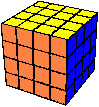
Diagonal Corner Swapping The diagonal swapping of corners is a classical base-discipline of the principe "3 Phases". Compared to the straight swapping of corners the number of situations is small and contains some simple solutions. The combinations are all signed by  as final move. Because you don't have to care in which direction a diagonal situation reaches hand and eyes there are resulting no predictable states of the last layer at the end of a sequence. Thus I'm using the move 'U°' as hint for this circumstance. as final move. Because you don't have to care in which direction a diagonal situation reaches hand and eyes there are resulting no predictable states of the last layer at the end of a sequence. Thus I'm using the move 'U°' as hint for this circumstance. | Diagonaler Eckentausch Der diagonale Eckentausch ist eine klassische Grunddisziplin des Prinzipes "3 Phases". Durch die im Vergleich zum geraden Eckentausch geringe Anzahl von Situationen bleibt der Katalog überschaubar und beinhaltet zum Teil bemerkenswert einfache Lösungen. Die Folgen sind durchweg mit dem Symbol als Abschlußzug versehen. Da man sich nicht auf eine bestimmte Ausgangsstellung der jeweils auftretenden Situation festlegen muß, resultieren hieraus verschiedene Schlußstellungen nach Ausführen einer Folge. Da dies von vornherein schwer vorherzusagen ist, wird der Zug 'U°' verwendet, um die Beliebigkeit des abschließenden Zuges darzustellen. | |||||||||
| 05/10/2007 | 10.05.2007 | |||||||||
 |  | | | |||||||